



Choosing a flea and tick treatment for dogs can feel confusing: chewables, spot-ons, collars, monthly, three-monthly, prescription and over the counter. The good news is that the main options all work well when used correctly. The right one for your dog depends on how easy it is to give, how long it lasts, your dog’s weight and health, and whether you have other pets at home.
This guide compares the three main types, explains the safety points vets stress most, and shows how to pay less for the treatment you choose. It is general information, not veterinary advice — your vet is the best person to recommend a product for your dog.

The three main types of flea and tick treatment for dogs
1. Chewable tablets
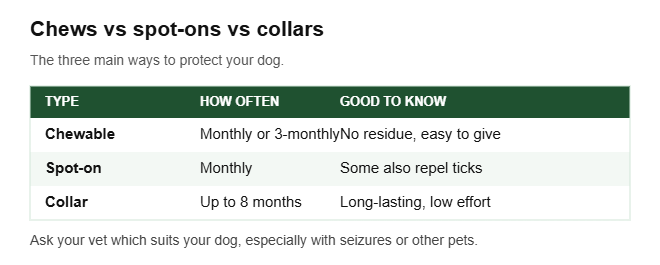
Oral chews such as NexGard, Simparica and Credelio are given monthly, while Bravecto lasts three months per dose, according to Cornell University College of Veterinary Medicine. Most dogs take them like a treat, there is no greasy residue, and bathing or swimming does not wash them off. Many chewables are prescription products in the US.
Good to know: chewables in the isoxazoline class have been associated with rare seizures, so dogs with a seizure history should only use them on a vet’s advice.
2. Spot-on (topical) treatments
As a flea and tick treatment for dogs, spot-ons are liquid applied to the skin between the shoulder blades, usually monthly. Some also repel ticks and other biting insects before they bite. They suit dogs that refuse tablets, but you need to avoid bathing for a short period after application and keep children and other pets from touching the spot until it dries.
3. Collars
Long-lasting collars such as Seresto can protect for up to eight months and repel ticks as well as killing fleas. They are the lowest-effort option, but check the collar fits properly and remove it if your dog shows any skin irritation.
How to choose flea and tick treatment for your dog
- Start with what your dog will accept. A treatment only works if it is given on time. If your dog eats anything, a chewable is easy. If tablets are a battle, a spot-on or collar may be more reliable.
- Buy for your dog’s exact weight. Every flea and tick treatment for dogs is dosed by weight band. Weigh your dog and choose the matching pack — never split or combine doses unless your vet tells you to.
- Consider ticks where you live. In areas with lots of ticks, a product that also repels or quickly kills ticks is worth prioritising.
- Think about other pets. Some dog products are dangerous to cats. If you have a cat, ask your vet which dog treatment is safe to use in the same home.
- Check your dog’s health. Puppies, pregnant or nursing dogs, elderly dogs and dogs with medical conditions may need specific products. Always check the minimum age and weight on the pack.
- Look at the interval. Monthly, three-monthly or eight-monthly — longer intervals mean fewer missed doses.
Why year-round protection matters
It is tempting to use flea and tick treatment for dogs only in summer, but vets generally recommend year-round flea and tick treatment for dogs. Ticks can stay active in cool weather, and fleas can survive indoors through winter in a warm home. Skipping months gives an infestation the chance to take hold, and clearing fleas from a house is far harder than preventing them.
Flea and tick treatment for dogs: safety points to follow
- Never use a dog product on a cat — some ingredients are toxic to cats.
- Use one product at a time unless your vet recommends combining them.
- Follow the pack instructions on dosing, timing and application.
- Watch for reactions after the first dose — vomiting, lethargy, skin irritation or unusual behaviour — and contact your vet if you see them.
- Buy from reputable sellers. Counterfeit flea products exist. Buy from a licensed pharmacy or trusted retailer.
How to pay less for flea and tick treatment
Flea and tick treatment for dogs is an ongoing cost, so small savings add up over a year. A few ways to reduce it:
- Buy multi-dose packs. Six- or twelve-month packs usually cost less per dose than single doses.
- Use an online pet pharmacy. Online retailers are often cheaper than buying at the clinic, and many offer free shipping.
- Stack a code with free shipping. Percentage-off codes on flea and tick products can be combined with free-shipping thresholds on larger orders.
Save on flea and tick treatments
Budget Pet Care regularly offers extra discounts on flea and tick treatments, including popular chewables, plus free shipping on eligible orders.
Frequently asked questions
What is the best flea and tick treatment for dogs?
There is no single best product for every dog. Chewables, spot-ons and collars all work well when used correctly. The best choice depends on your dog’s weight, health, lifestyle and what they will accept — your vet can recommend one.
Are chewable flea treatments safe?
They are widely used and generally well tolerated. Chewables in the isoxazoline class have been linked to rare seizures, so dogs with a history of seizures should use them only on veterinary advice.
Do dogs need flea treatment in winter?
Year-round treatment is generally recommended, because ticks can be active in cool weather and fleas can survive indoors.
Can I use dog flea treatment on my cat?
No. Some dog products contain ingredients that are toxic to cats. Use only products labelled for cats, as advised by your vet.
How often should I give flea and tick treatment?
It depends on the product — commonly monthly, every three months, or up to eight months for some collars. Follow the pack instructions and set a reminder so doses are not missed.
The bottom line
The right flea and tick treatment for dogs is the one your dog will accept, dosed for their exact weight and given on time all year round. Chewables are easy and clean, spot-ons suit tablet-refusers, and collars are the lowest-effort option. Check with your vet for dogs with health conditions or cats in the home, then buy multi-dose packs with a current code to keep the yearly cost down.
This article is general information and is not a substitute for advice from your veterinarian. Product guidance is based on information published by Cornell University College of Veterinary Medicine.