


Raw dog food is one of the few pet topics where the marketing and the veterinary guidance point in opposite directions, and owners are left in the middle. This guide lays out both sides plainly, then covers the practical part: formats, cost, how to switch, and how to handle it without making anyone in the house ill.
Nothing here replaces your vet. If your dog has a health condition, is very young, or lives with someone whose immune system is compromised, that conversation comes first.
1. What counts as raw dog food
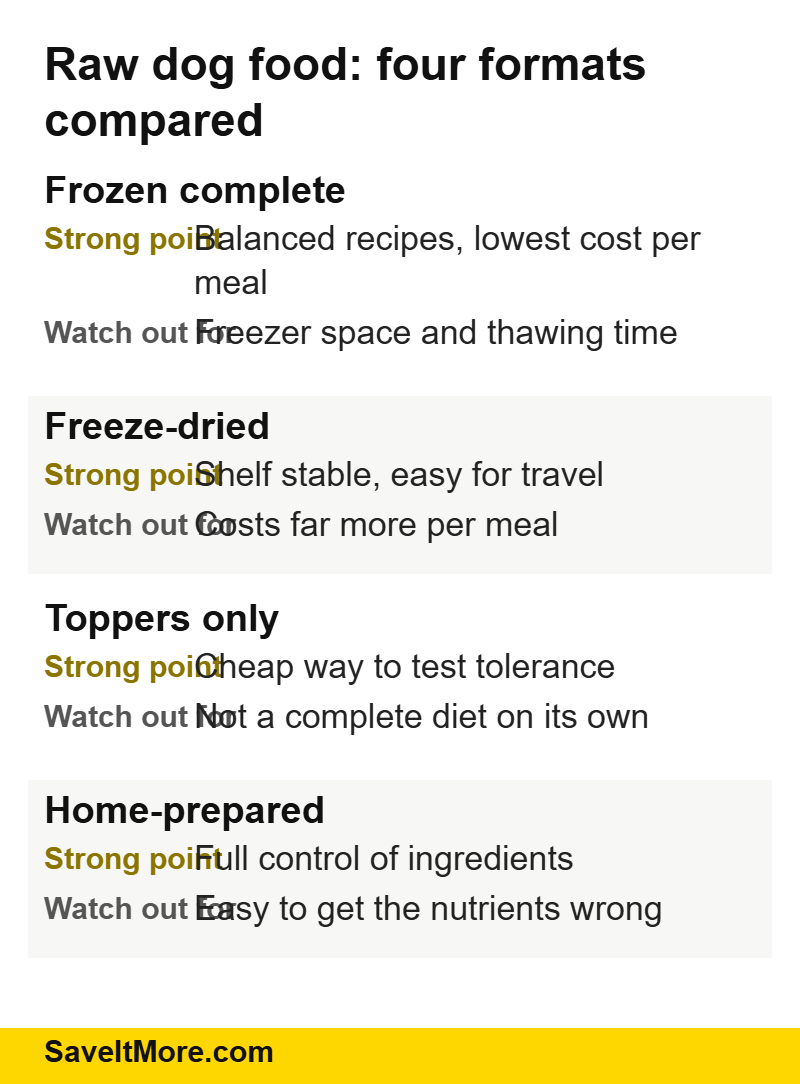
The raw dog food label covers frozen complete meals, freeze-dried nuggets, raw meaty bones, and home-prepared bowls. A “complete” raw product is formulated to meet the nutritional profile a dog needs. A topper, a bag of chews or a tub of tripe is a supplement to a diet, not a diet.
That distinction is where most beginner mistakes happen: feeding pieces of the picture and assuming it adds up to a balanced meal.
2. What testing has actually found
This is the part sellers skip. In FDA testing of pet food samples, raw pet food stood out sharply from other categories: of 196 raw samples, 15 tested positive for Salmonella and 32 for Listeria monocytogenes, while dry and semi-moist foods showed little or no contamination. The agency’s guidance on raw pet food diets is worth reading in full before you decide.
The American Veterinary Medical Association’s policy on raw or undercooked animal-source protein discourages feeding it, mainly because of that transmission risk to people in the household.
Plenty of owners feed raw anyway and report better coats, smaller stools and more energy. Those reports are real, but they are not the same kind of evidence, and an honest page has to say so.
3. Handling it safely is not optional
If you do feed raw dog food, the handling rules are the same as for raw chicken in your own kitchen:
- Wash hands for at least 20 seconds after handling food or bowls.
- Thaw in the fridge or microwave, never on the counter.
- Keep it away from human food, and use separate boards and utensils.
- Clean surfaces with hot soapy water, then a bleach solution.
- Refrigerate or bin leftovers straight away rather than leaving the bowl down.
- Avoid face licks right after meals, especially with children.
4. Who should not feed it
Skip raw dog food entirely if anyone in the home is pregnant, elderly, undergoing chemotherapy, or otherwise immunocompromised. The same applies to dogs with compromised immune systems, pancreatitis, or kidney disease unless a vet has specifically advised it.
Households with toddlers who share floor space with the dog bowl are a judgement call worth making with your vet rather than a forum.
5. How to switch without a week of mess
Most digestive upsets on raw dog food come from switching too fast. Run the change over seven to ten days: a quarter raw for two days, then half, then three quarters, watching stools at each step. If they loosen, hold at the previous ratio for a few more days instead of pushing on.
Start with a single protein — often chicken or turkey — rather than a mixed box. If something disagrees with your dog, you want to know which ingredient it was.
Daily amounts usually land around 2 to 3% of adult body weight, split across two meals, adjusted by body condition rather than the number on the bag. Puppies, working dogs and pregnant dogs all need more.
6. What it really costs, and how to cut it
Raw dog food costs several times what mid-range kibble costs per meal, and that gap is what puts most people off, and freeze-dried costs the most of all. Three things bring the number down:
- Buy frozen in bulk. The price per pound drops sharply on larger boxes, if you have freezer space.
- Use a subscription. Auto-ship pricing is usually the lowest standing price a store offers, and you can pause it.
- Feed raw as part of the diet. Many owners run raw toppers over a good dry food rather than going fully raw — cheaper, and it keeps the handling risk smaller.
For current offers, Raw Paws Pet Food deals on SaveItMore lists the store’s sale section and its Auto Ship programme, taken from the store’s own affiliate feed.
While you are sorting the food out, the other recurring pet cost worth getting right is parasite prevention — our guide to flea and tick treatment for dogs covers how to choose between chewables, spot-ons and collars.
Frequently asked questions
Is raw dog food better than kibble?
There is no good evidence that it is nutritionally superior when both are complete and balanced. There is evidence that raw carries a higher contamination risk. Owners who prefer it usually do so for observed coat, stool and energy changes.
Can puppies eat raw dog food?
Only on a complete formula designed for growth, and ideally with vet input. Getting calcium and phosphorus wrong during growth causes lasting skeletal problems.
Do raw bones clean teeth?
Chewing does help remove plaque, and raw bones are safer than cooked ones, which splinter. Slab fractures and choking remain real risks, so supervise and match the bone size to the dog.
How long can raw food sit in the bowl?
Treat it like raw meat in your own kitchen: about 20 minutes at room temperature, then refrigerate or throw it away.
The short version
Raw dog food is a legitimate choice that comes with a real, measured hygiene risk and a higher price. If you feed it, buy complete formulas from a store that handles cold chain properly, transition slowly, handle it like raw chicken, and keep it away from vulnerable people. If any of that sounds unmanageable in your home, a good dry food with a raw topper gets you most of the way with far less to go wrong.