

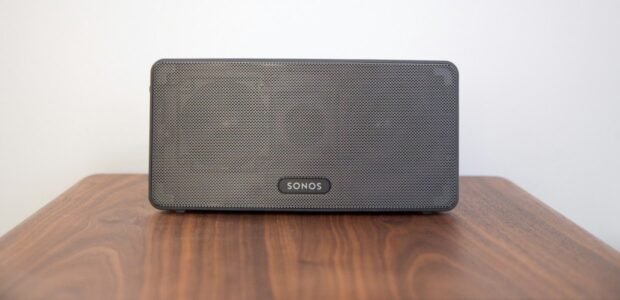

This bluetooth speaker buying guide exists because every listing reads the same: loud, long battery, waterproof. The specs that actually separate a speaker you’ll still use in a year from one that ends up in a drawer are quieter — they’re in the fine print, not the headline.
SaveItMore is reader-supported. If you buy through a link on this page we may earn a commission, at no extra cost to you.
Wattage Isn’t Loudness — Here’s What Actually Is
Wattage is the first myth any honest bluetooth speaker buying guide has to bust: a higher wattage number sells speakers, but wattage measures power the amp can draw, not how loud or how good the speaker sounds. Two speakers rated at the same wattage can sound completely different depending on driver size, enclosure design, and tuning. If loudness for outdoor use is the priority, look for a stated maximum SPL (sound pressure level) or, failing that, read reviews that specifically mention outdoor or backyard use rather than trusting the watt number alone.
Battery Life: Read the Volume the Test Was Run At
Battery life is the second thing any bluetooth speaker buying guide should make you double-check: advertised battery life (often 12-24 hours) is almost always measured at 50% volume in a quiet room. Push a speaker to fill a backyard or drown out a pool party and real battery life can drop by a third or more. If all-day outdoor use matters, prioritize the higher end of the advertised range and treat the number as optimistic, not guaranteed.
IP Rating: What the Numbers Actually Mean
An IP rating like IP67 has two digits for a reason: the first (dust, 0-6) and the second (water, 0-9). IPX7 means it survives full submersion briefly; IPX5 means it handles a splash or light rain but not a swim. For pool or beach use, look specifically for a second digit of 7 or higher — a speaker that’s only splash-rated will not survive going in the water, regardless of how rugged it looks.

Pairing Range and Multi-Speaker Linking
Range is the part most people never check in a bluetooth speaker buying guide: standard Bluetooth range is rated around 30 feet (10 meters) but walls, other electronics, and even a crowded pool deck of other Bluetooth devices can cut real-world range noticeably shorter. If you want sound spread across a bigger space, check specifically for stereo-pairing or multi-speaker linking support — not every brand’s speakers link with speakers from a different line, even within the same brand.
Driver Size and Passive Bass Radiators
Driver size rarely gets its due in a bluetooth speaker buying guide, but bigger drivers generally mean fuller low-end response, but portable speakers are size-constrained, so many manufacturers add passive bass radiators — unpowered cones that vibrate with air pressure to add perceived bass without adding battery drain. It’s a legitimate trick, not a gimmick, but it can’t fully replace a genuinely larger driver at higher volumes, where passive radiators tend to distort before an active driver would.
Charging Case and Port Type
USB-C charging is now standard on most current models, which matters if you’re trying to travel with fewer cable types. A few budget models still ship with micro-USB — not a dealbreaker, but worth checking before you assume your existing cables will work.
Where to Buy and How to Save
This bluetooth speaker buying guide wouldn’t be complete without where to actually buy one: Soundcore, Anker’s audio brand, covers most of the categories above across its lineup — from pocket-sized clip speakers to larger party speakers with real outdoor volume. It’s worth checking Soundcore’s current coupon codes and deals before checkout, since discounts vary by model and bundle. If you’re shopping for other audio or outdoor gear at the same time, our gaming headset buying guide and camping gift ideas guide cover related picks, and our practical gift ideas guide has a few audio picks in the same range too.
Common Mistakes When Buying a Bluetooth Speaker
- Chasing the wattage number. It’s a power spec, not a quality or loudness guarantee — two speakers with identical wattage can sound very different.
- Trusting the advertised battery life at face value. That number is almost always measured at moderate indoor volume — outdoor use at higher volume can cut it by a third or more.
- Assuming any waterproof rating means submersible. A splash-rated (IPX4/IPX5) speaker will not survive a dunk in the pool — only IPX7 and above are rated for that.
- Assuming multi-speaker pairing works across a brand’s whole lineup. It usually only works within the same product family — check the specific models before buying two speakers expecting them to link.
True Wireless Stereo (TWS) and Party Mode
Some speakers support pairing two identical units into a stereo pair (one handling left channel, one right) for a wider soundstage, while others offer a “party mode” that links many speakers to all play the same audio in sync across a bigger space. These are two different features solving two different problems — stereo pairing improves sound quality for close listening, party mode is about coverage across a bigger area — and not every model offers both, so check which one you actually need before assuming a speaker supports it.
Indoor vs Outdoor Use: Different Priorities
For mostly indoor use — a kitchen, a desk, a bedroom — sound quality and battery convenience matter more than ruggedness, and a mid-range speaker with good driver tuning will outperform a “loud” outdoor-focused model in a small room. For backyard, pool, or beach use, prioritize IP rating and real outdoor SPL over subtle audio quality differences that get lost outdoors anyway. Buying an indoor-tuned speaker for outdoor use is one of the more common regret purchases in this category.
FAQ
Does a higher wattage speaker always sound better? (Bluetooth speaker buying guide FAQ)
No. Wattage is a power rating, not a quality rating — driver size, enclosure tuning, and the amp’s actual efficiency matter more for how good a speaker sounds at a given volume.
Can I use a waterproof speaker in the shower?
If it carries an IPX5 rating or higher, yes — light spray and splashes are exactly what that rating covers. Only fully submersion-rated speakers (IPX7/IPX8) should go underwater, and even then, briefly.
Why does my speaker’s battery drain faster outdoors?
Higher volume draws more power, and outdoor environments push most people to raise the volume well above the level battery-life tests are run at, which is the main reason real-world battery life runs shorter than advertised.
Do all Bluetooth speakers from the same brand pair together?
Not always. Stereo-pairing and multi-speaker linking usually only work within the same product line or a specific compatible group, so check the product page rather than assuming any two speakers from a brand will link.
How long do Bluetooth speaker batteries last before they degrade?
Lithium batteries in portable speakers typically hold most of their capacity for 2-3 years of regular charging cycles before noticeable capacity loss sets in — similar to a phone battery. Storing a speaker fully charged in a hot car for long periods speeds up that degradation.