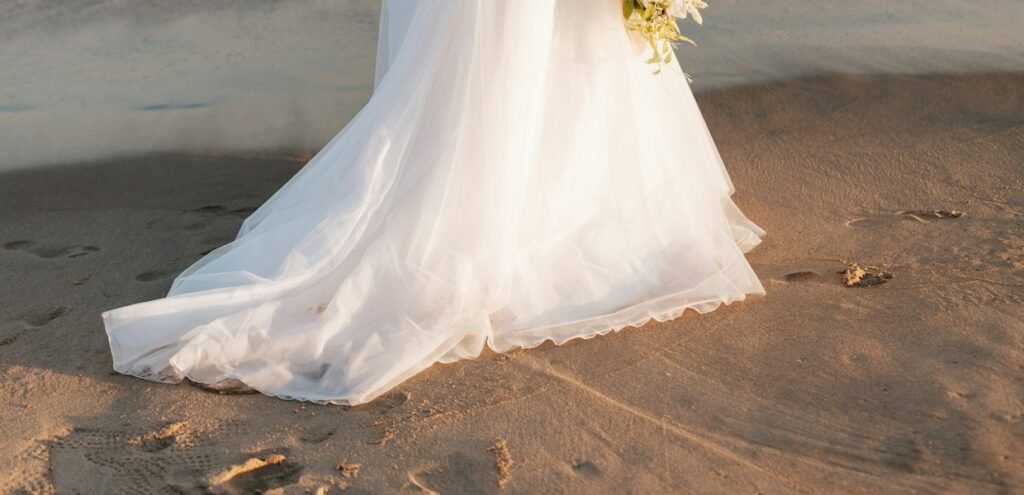
Every wedding dress silhouette looks different once it moves — down an aisle, across sand, under a hem of a different weight. Photos and a mannequin only tell you so much. Before you fall for a shape because it trended on social media, it helps to know what each silhouette actually does: how it sits, what fabric it needs, and which venues flatter it.
SaveItMore is reader-supported. If you buy through a link on this page we may earn a commission, at no extra cost to you.
This guide walks through the five silhouettes that cover almost every wedding dress sold online, how to match one to your venue and body, and where to check for a live discount once you have narrowed it down.
Why silhouette matters more than trend
A silhouette is the dress’s overall shape — not the neckline, not the fabric, not the beading. It is the single biggest factor in how a dress photographs, how it moves, and how comfortable you are standing in it for eight hours. A heavily structured ballgown and a fluid slip dress can use the same lace and still feel like two completely different garments to wear.
Trend cycles move fast online, but venues and body mechanics do not. A silhouette chosen because it suited the last real wedding you went to, rather than a feed of photos, holds up better on the day.
The five main wedding dress silhouettes
A-line
Fitted through the bodice and waist, then falling in a gentle triangle to the floor — no dramatic flare, no cling. It is the most universally forgiving shape, works in structured and fluid fabrics alike, and travels well, which matters if a dress is being shipped internationally.
Ballgown
A fitted bodice with a full, often structured skirt, sometimes supported by layers of tulle or a hoop. It needs the most room — for walking, for sitting, for a car door — and the most fabric, which usually means a longer production and shipping window.
Mermaid and trumpet
Fitted through the body and flaring at or below the knee. A mermaid flares lower (closer to the knee) than a trumpet (which flares higher, nearer mid-thigh). Both need real structure — boning, lining, sometimes a built-in corset — to hold the shape, and both restrict stride length more than any other silhouette.
Sheath or column
Straight from shoulder to hem, following the body’s natural line with minimal flare. It depends entirely on fabric weight and a clean fit, since there is no structure to hide a measurement that is slightly off. It is also the lightest to travel in, which is why it shows up so often for destination and courthouse weddings.
Empire
A fitted bodice that stops just under the bust, with the rest of the dress flowing loosely from there. It needs the least structure of any silhouette and is the most forgiving around the waist and hips, since nothing is fitted below the bustline.
Matching silhouette to your venue
Beach or destination: sheath, column and empire silhouettes travel best — they pack smaller, weigh less in checked or carry-on luggage, and don’t drag or collect sand the way a full skirt does. If you’re flying the dress out, our guide on shipping luggage ahead instead of checking it is worth reading before you pack a gown for travel.
Garden or outdoor: A-line and empire again do well here — enough shape to photograph nicely against greenery, without the structure that gets uncomfortable standing on grass or gravel for photos.
Ballroom or formal church: this is where a ballgown earns its fabric. A dramatic skirt reads well in a large, high-ceilinged room and has space to move without catching on furniture or guests.
Courthouse or small venue: sheath and A-line are the practical choices — easier to sit in, easier to move through a smaller space, and less likely to need a second person managing the train.
Matching silhouette to body type
There is no universally “correct” silhouette for a body type — comfort and how you feel in it matter more than any general rule. That said, a few practical patterns show up often enough to be useful starting points, not strict rules:
- An A-line or empire waistline tends to feel comfortable across the widest range of body shapes, since neither depends on a tightly fitted midsection.
- A mermaid or trumpet needs the fitted panel to sit exactly right through the hip and thigh — if you try one on, sit down in it before deciding, since the fit can change noticeably between standing and sitting.
- A sheath shows every line of the fabric and the body underneath it, so the fabric choice (a structured satin vs. a soft crepe) matters as much as the cut itself.
- A ballgown’s fitted bodice can be built with more or less structure — ask what’s underneath the outer fabric, since a built-in corset changes the fit differently than simple boning.
Whatever silhouette you’re drawn to, try it in person or request detailed measurement photos before ordering online. Our guide to measuring yourself for a dress at home covers the four measurements that matter most for any silhouette, and is worth doing before you order regardless of shape.
Where to find affordable options
Once you’ve settled on a silhouette, price-check before you commit to a single retailer — the same general shape can vary enormously in price depending on fabric and where it’s made. AW Bridal’s current coupon codes are worth checking if you’re comparing bridesmaid or bridal styles across several silhouettes, since codes there often apply sitewide rather than to a single collection.
If you’re also sorting out a ring at the same time, our piece on finding a ring size without asking covers a related measuring problem that comes up around the same stage of planning.
Frequently asked questions
Can I change silhouettes after ordering?
Rarely, and almost never for free. Most retailers start production quickly once an order is placed. Decide on silhouette before you order, not after.
Which silhouette is easiest to alter?
A-line and empire generally allow the most room for a seamstress to adjust, since there’s less built-in structure to work around. A mermaid or trumpet is the hardest to resize significantly after the fact.
Does silhouette affect how heavy a dress feels to wear?
Yes, substantially. A ballgown’s layered skirt can add real weight across a full day, while a sheath or empire in a light fabric is noticeably easier to wear for hours.
Can one silhouette work for both the ceremony and reception?
Usually yes — the bigger practical issue is comfort for dancing, not the silhouette itself. A-line and empire tend to hold up best if you’re on your feet moving around for most of the evening.
Is a more structured silhouette automatically more formal?
Generally, yes, but fabric and fit matter just as much as shape — a simple, well-made sheath in silk can read as more formal than a stiff, budget ballgown.
The bottom line
Start from your venue and how the day will actually move — sitting, walking, dancing, travelling — rather than from a single photo you liked. A-line and empire silhouettes flatter the widest range of bodies and venues; mermaid, trumpet and ballgown ask more of both the fabric and the day. Try before you buy where you can, measure carefully where you can’t, and compare prices across retailers once you know the shape you want.