


Choosing between a cordless vs corded robotic pool cleaner comes down to one trade-off: convenience against power and runtime. Cordless robots have no cable to tangle and are easy to drop in and lift out. Corded robots run for as long as you need, usually clean harder, and often run on a weekly schedule. Neither is better for every pool — the right choice depends on your pool’s size, shape and how hands-off you want cleaning to be.
This guide explains the real differences, which type suits which pool, the features that matter most, safety points to check, and how to save on the robot you choose.
The short answer
- Choose cordless for above-ground pools and smaller in-ground pools, or if you hate managing a cable and are happy to recharge between cleans.
- Choose corded for large in-ground pools, pools with lots of debris, or if you want a set-and-forget weekly schedule.
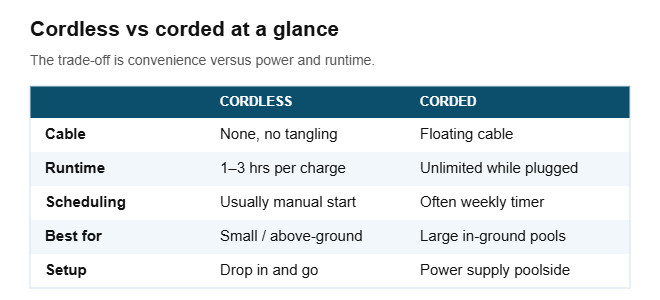
Cordless vs corded robotic pool cleaner at a glance
How cordless robots work
A cordless robot runs on a built-in rechargeable battery. You charge it, drop it into the pool, and it cleans for a set time before stopping. Runtimes typically range from around one to three hours depending on the model and what it is cleaning, followed by several hours of charging. The big advantages are no cable to tangle, no power supply beside the pool, and very quick setup.
How corded robots work
A corded robot connects to a power supply beside the pool through a long floating cable. Because it never runs out of charge, it can finish full cleaning cycles at constant power and often runs on a built-in weekly timer. Independent testers such as Poolbots favour corded models for large pools because of that steady suction and automation. The downside is managing the cable, which can twist over time unless the robot has a swivel.
Cordless vs corded robotic pool cleaner: which is better for your pool?
Above-ground pools: cordless is usually the easiest option. These pools are smaller, and a lightweight cordless robot covers the floor comfortably on one charge.
Small to mid-size in-ground pools: either works. Cordless wins on convenience; corded wins if you want walls and waterline cleaned on a schedule.
Large in-ground pools or heavy debris: corded is the safer bet, because a battery may run out before the job is done.
Pools with steep slopes or unusual shapes: check the model’s specifications carefully — some budget robots are designed for flat floors only.
Beyond cordless vs corded robotic pool cleaner: features that matter
- What it cleans: floor only, floor and walls, or floor, walls and waterline. The waterline is where oils and algae build up, so wall and waterline cleaning is worth paying for if your pool needs it.
- Maximum pool size: every robot lists a maximum pool area or length. Buy for your pool, with some margin.
- Filtration: fine filters catch dust and pollen; coarse filters handle leaves. Some robots let you swap between them. A larger, top-loading filter basket means less frequent emptying.
- Runtime and charge time (cordless): compare the stated cleaning time against the size of your pool, and note how long a full recharge takes.
- Scheduling: weekly timers are common on corded models and rarer on cordless ones.
- Weight and retrieval: lifting a wet robot out of the water is easier with a lighter unit, a retrieval hook, or a model that parks at the waterline when finished.
- Pool surface: vinyl and fibreglass need gentler brushes than concrete or gunite. Check the brush type suits your pool.
Safety: check recalls and certifications
Whichever side of the cordless vs corded robotic pool cleaner debate you land on, safety matters. Battery-powered products need a little extra care. Some cordless pool robots have been recalled over charger or battery overheating — including two Aiper models, according to the US Consumer Product Safety Commission. Before buying any robot, cordless or corded:
- Search the model name on the CPSC recalls site.
- Look for a recognised safety certification such as ETL or UL.
- Register the product after purchase so the maker can contact you about updates or recalls.
- Charge on a hard, dry surface away from direct sun, and follow the manufacturer’s charging instructions.
Aiper: a popular cordless option
Aiper is one of the best-known cordless robotic pool cleaner brands, with models ranging from basic floor cleaners for above-ground pools to higher-end robots that clean walls and waterlines. Its appeal is simple: no cable, easy setup and competitive prices. Reviewers such as The Pool Nerd have been critical of cordless suction and runtime compared with corded rivals, so match the model carefully to your pool size and check the surfaces it cleans before buying.
If a cordless robot suits your pool, check the current offers first — Aiper runs regular percentage-off promotions.
Save on a robotic pool cleaner
Whether you pick cordless or corded, a robotic pool cleaner is a big purchase, so even a modest discount is worth having. Compare the code with any bundle or sale price on the model you want.
Cordless vs corded robotic pool cleaner mistakes to avoid
Buying for a smaller pool than yours. A robot rated below your pool size will leave areas uncleaned or run out of battery.
Ignoring what it cleans. A floor-only robot will not touch the waterline.
Forgetting the filter. A full filter basket kills suction. Empty and rinse it after every clean.
Leaving it in the pool. Most manufacturers recommend removing the robot after cleaning to protect the motor and battery.
Frequently asked questions
Is a cordless or corded robotic pool cleaner better?
Cordless is more convenient and suits smaller or above-ground pools. Corded delivers constant power, unlimited runtime and often weekly scheduling, which suits large in-ground pools.
How long do cordless pool robots run?
Typically about one to three hours per charge, depending on the model and cleaning mode, with several hours needed to recharge.
Do cordless robots clean walls and the waterline?
Some do and some clean only the floor. Check the specifications of the exact model before you buy.
Are cordless pool robots safe?
Most are, but check the CPSC recall list for the model, choose a certified product, register it after purchase and follow the charging instructions.
How often should a robotic pool cleaner run?
Two to three times a week is enough for most residential pools, more often during heavy leaf fall or pool parties.
The bottom line
The cordless vs corded robotic pool cleaner decision is really about your pool. For small and above-ground pools, cordless offers easy, cable-free cleaning. For large in-ground pools and set-and-forget automation, corded is usually stronger. Whichever you choose, match it to your pool size and surfaces, check for recalls and certifications, and look at the current codes before you pay.