



If your eyes feel gritty, tired, burning or watery by the afternoon, simple dry eye relief at home can make a real difference. Dry eye is extremely common — especially with long screen days, air conditioning, heating and ageing — and many people get meaningful relief from a few consistent daily habits.
This guide covers the at-home steps eye doctors recommend, how to build them into a simple routine, how to choose artificial tears, and when it is time to see a professional. It is general information, not medical advice.

What causes dry eyes?
Your tear film has three layers — oil, water and mucus — and it needs all three to keep the eye comfortable. Dry eye happens when you do not make enough tears, or when tears evaporate too quickly, often because the tiny oil glands along the eyelids are not working well. Common triggers include long screen use (we blink far less when concentrating), dry indoor air, wind and smoke, contact lenses, some medications and simply getting older.
7 steps for dry eye relief at home
These recommendations follow guidance from the American Academy of Ophthalmology.
1. Use a warm compress
A warm compress on closed eyelids for a few minutes helps loosen the oils in the eyelid glands, which improves tear quality and slows evaporation. A clean warm washcloth works; reusable heated eye masks keep an even temperature for longer.
2. Clean your eyelids gently
After the compress, gently clean along the lash line with warm water and a clean cloth, or a cleanser made for eyelids. This removes oil, debris and flakes that can block the glands.
3. Take screen breaks and blink fully
When we focus on screens, blinking slows and becomes incomplete. Take regular breaks, look into the distance, and make a conscious effort to blink fully every so often.
4. Add moisture to the air
A humidifier helps in dry climates and in heated or air-conditioned rooms. In polluted areas, a good air filter at home can also help.
5. Protect your eyes outdoors
Wraparound sunglasses shield your eyes from wind, which dries them out quickly. Avoid cigarette smoke, and point car and desk fans away from your face.
6. Use artificial tears the right way
Lubricating eye drops can give quick relief. If you use them often through the day, preservative-free drops are usually gentler on the eye. Thicker gels can help overnight, but they blur vision, so they are best used at bedtime.
7. Build it into a daily routine
The biggest factor in dry eye relief at home is consistency. A few minutes each day works far better than an occasional long session.
A simple daily routine for dry eye relief at home
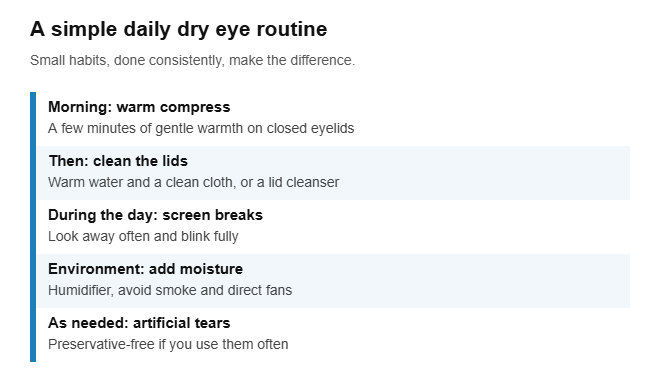
- Morning: warm compress for a few minutes, then gentle lid cleaning.
- During the day: screen breaks, full blinks, and artificial tears as needed.
- At home: humidifier on in dry rooms, fans pointed away from your face.
- Evening: a second warm compress if your eyes feel tired, and a lubricating gel at bedtime if recommended.
How to choose products for dry eye
- Artificial tears: choose preservative-free drops if you use them several times a day.
- Heated eye masks: easier and more consistent than a washcloth for warm compresses.
- Eyelid cleansers: wipes, foams or sprays made specifically for the eyelids, gentler than regular soap.
- Supplements: some people take eye-health supplements such as omega-3s; the evidence is mixed, so talk to your doctor first, especially if you take other medications.
If you would rather follow a ready-made routine, some brands package these steps together. CorneaCare, for example, offers eyelid hygiene products, artificial tears, eye masks and supplements designed around a daily dry eye routine.
Save on eye care products
CorneaCare regularly runs offers on eyelid hygiene, artificial tears and eye vitamins, plus free-shipping deals.
Spending long days at a screen? A properly set-up desk helps too — see our standing desk height guide for putting your monitor at the right height.
Dry eye relief at home for contact lens wearers
Contact lenses sit on the tear film, so they can make dry eye feel worse. A few extra habits help:
- Use drops labelled safe for contact lenses, or remove lenses before using other drops.
- Stick to the replacement schedule and never sleep in lenses unless they are designed for it.
- Give your eyes lens-free time, such as evenings or weekends in glasses.
- Ask your optometrist about lens materials or daily disposables designed for dry eyes.
Common mistakes that make dry eyes worse
Rubbing your eyes. It irritates the surface and can spread bacteria. Use a cool compress or drops instead.
Using redness-relief drops every day. Drops that “get the red out” are not the same as lubricating tears, and frequent use can cause rebound redness.
Skipping days. Warm compresses and lid cleaning only work when done consistently. Missing days lets the oil glands block again.
Sleeping in a draught. A fan or air vent blowing on your face overnight dries the eyes. Redirect it or use a humidifier in the bedroom.
Avoiding these mistakes is as important for dry eye relief at home as any product you buy.
When to see an eye doctor
Dry eye relief at home helps many people, but see an optometrist or ophthalmologist if:
- Symptoms do not improve after a few weeks of consistent home care
- You have eye pain, sensitivity to light or changes in your vision
- Your eyes are red, swollen or producing discharge
- You wear contact lenses and your eyes are uncomfortable
- Symptoms started after starting a new medication
An eye doctor can identify the type and cause of your dry eye and recommend prescription treatments or in-office procedures if needed.
Frequently asked questions
What is the fastest dry eye relief at home?
Lubricating eye drops give the quickest short-term relief. For longer-lasting improvement, combine them with warm compresses and eyelid cleaning every day.
How long should I use a warm compress?
A few minutes on closed eyelids is typical. Use gentle warmth, never hot, and follow any product instructions for heated masks.
Are preservative-free eye drops better?
They are generally gentler if you use drops frequently through the day, because preservatives can irritate the eye with repeated use.
Can screens cause dry eyes?
Screens reduce how often and how fully you blink, which lets tears evaporate. Regular breaks and conscious blinking help.
Does drinking water help dry eyes?
Staying hydrated supports overall health, but it is rarely enough alone. Warm compresses, lid hygiene and a good environment usually make a bigger difference.
The bottom line
Effective dry eye relief at home comes from small, consistent habits: warm compresses, gentle lid cleaning, screen breaks, moist air and the right artificial tears. Build them into a daily routine, and see an eye doctor if symptoms persist or you notice pain or vision changes.
This article is general information and not medical advice. Always follow the guidance of your eye care professional.