A mini excavator is one of the few pieces of equipment that pays for itself fast once you own land, run a small contracting business, or simply got tired of renting one every time a trenching job comes up. But the mini excavator buying guide most people need isn’t a spec sheet – it’s a way to match weight class, dig depth, and attachments to the actual jobs you do, so you don’t overpay for capacity you’ll never use or undersize a machine that can’t finish the work.
SaveItMore is reader-supported. If you buy through a link on this page we may earn a commission, at no extra cost to you.
What Counts as a “Mini” Excavator?
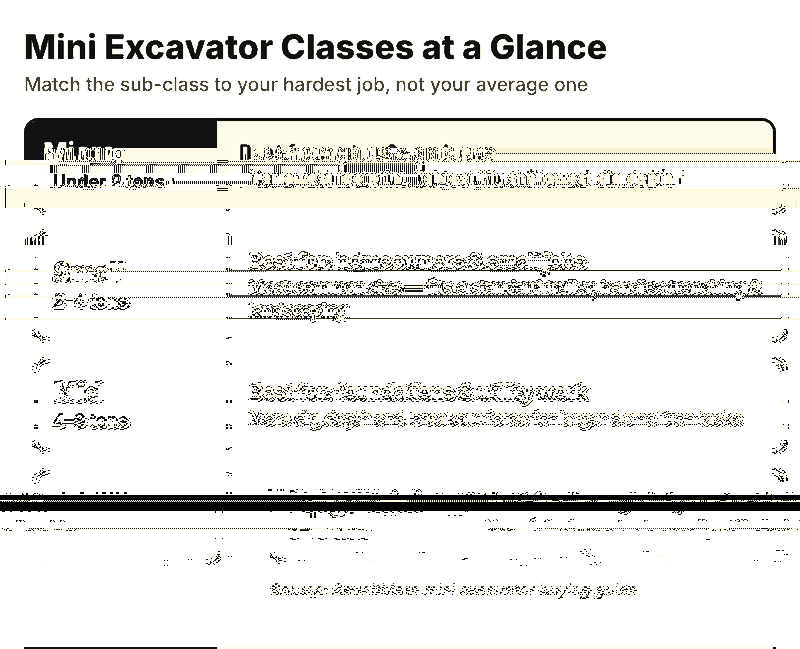
Anything under about 10 metric tons is generally considered a mini (or compact) excavator, and the category splits further into sub-classes that matter more than the “mini” label itself:
- Micro (under 2 tons): narrow enough for gates and gardens, limited dig depth, lightest lift capacity.
- Small (2-4 tons): the most common homeowner and small-contractor size – fits on a standard trailer, handles most trenching and landscaping jobs.
- Mid (4-8 tons): more dig depth and breakout force for foundations, utility work and larger demolition tasks.
- Large mini (8-10 tons): approaches full-size excavator output while staying road-trailerable without special permits in most states.
Start from the job, not the machine. A weekend landscaper and a utility subcontractor both call it a “mini excavator,” but they need different sub-classes entirely.
Step 1: Match Dig Depth and Reach to Your Jobs
Dig depth and reach are the two numbers that decide whether a machine can actually finish your work, and they scale with weight class but aren’t identical across brands at the same tonnage. Before comparing prices, write down:
- The deepest trench or footing you realistically dig (utility lines, septic work and foundations usually need more depth than people expect).
- The farthest reach you need without repositioning, especially around structures, fences or existing landscaping.
- Any overhead or lateral clearance limits – a canopy, low garage door, or tight side yard changes which machine fits at all.
Buying for your hardest job, not your average one, avoids the common mistake of under-buying and then renting a bigger machine anyway for the jobs that matter.
Step 2: Decide Between a Fixed or Retractable Undercarriage
A retractable (variable) undercarriage narrows for gates and tight gaps, then widens for stability while digging – useful if you regularly work residential sites. A fixed undercarriage is simpler, has fewer moving parts to maintain, and is usually the better pick if your sites are open and width was never a constraint. If most of your jobs are backyards accessed through a standard gate, measure the gate width first; it often decides this question for you.
Step 3: Zero-Tail vs. Conventional Swing
A zero-tail-swing mini excavator keeps the counterweight within the width of the tracks, so the rear end doesn’t swing out past the machine’s footprint – critical when working close to walls, fences or parked vehicles. A conventional swing machine usually offers slightly more lift capacity and stability for the same weight class, since the counterweight can be larger. If you work mostly in open yards or farmland, conventional swing is often the better value; for residential and tight-access jobs, zero-tail-swing is worth the premium.
Photo by Luan Fonseca on Unsplash
Step 4: Think About Attachments Before You Buy, Not After
A bucket digs; attachments multiply what the machine does. The most commonly used options for small contractors and property owners are:
- Breaker/hammer – for concrete removal and rock.
- Auger – for post holes and footings, much faster than hand digging.
- Thumb/grapple – for clearing brush, logs and debris.
- Quick coupler – lets you swap attachments in minutes instead of pulling pins by hand.
Check the machine’s hydraulic flow rating against each attachment’s requirement before buying either one separately – an auger or breaker that needs more flow than the excavator’s auxiliary hydraulics provide will run slow and underperform no matter how good the attachment is.
Step 5: New, Used, or a Budget-Tier New Machine?
Three realistic paths exist for most buyers:
- Used, name-brand: lower upfront cost, but inspect undercarriage wear, hydraulic cylinder seals and engine hours closely – a cheap used machine with worn tracks can cost more in repairs than the discount was worth.
- New, budget/value brand: manufacturers like Chery Industrial sell mini excavators, skid steer attachments and compact equipment at a lower price point than the legacy brands, with a full warranty since the machine is new. This is often the better choice than an aging used machine of unknown history, especially for buyers who need the warranty protection and don’t need parts availability at every truck stop in the country.
- New, premium brand: the highest upfront cost, justified mainly by resale value and dealer network density if you need same-day parts or service.
For most homeowners and small operators running the machine a few dozen hours a month, a new value-tier machine with a warranty is a reasonable middle ground between an unknown used machine and premium-brand pricing.
Common Buying Mistakes
Ignoring transport weight. Check your trailer and tow vehicle’s rated capacity against the excavator’s full operating weight, not just the base machine weight.
Skipping the hydraulic flow check for attachments. Covered above, but it’s the single most common mismatch buyers run into after the sale.
Buying on sticker price alone. Compare what’s actually included – bucket, quick coupler, warranty length and delivery – since two similarly priced machines can differ a lot in total value.
More Mini Excavator Buying Guide Tips to Save Money
If a shelter or shed will house the machine and your other equipment, our shipping container shelter buying guide walks through sizing a cover for machinery storage. Our guide to sizing a portable power station is also useful if your job site needs off-grid power for lights, chargers or small tools. And if you’re setting up indoor storage or a workbench area alongside the equipment bay, our GARVEE furniture buying guide covers what holds up in a workshop setting.
Check current Chery Industrial offers before you order
Chery Industrial runs rotating percentage-off and clearance deals across mini excavators, attachments and other compact equipment. Check the current codes before you check out.
Frequently Asked Questions
What size mini excavator do I need for a residential yard?
Most residential jobs – trenching, small foundations, landscaping – are handled well by the 2-4 ton class, provided it fits through your gate. Measure your access points before choosing a sub-class.
Is a zero-tail-swing excavator worth the extra cost?
Yes, if you regularly work within a few feet of walls, fences or parked vehicles. If your sites are typically open, a conventional-swing machine usually offers more lift capacity for the same price.
Should I buy a used mini excavator or a new budget-tier one?
It depends on the used machine’s documented history. A well-maintained used machine can be a good deal, but a new value-tier machine with a warranty is often the safer choice when you can’t verify hours, maintenance records and undercarriage condition.
What attachments should I buy first?
A quick coupler pays for itself quickly if you’ll use more than one attachment. After that, an auger (post holes) or a breaker (concrete and rock) are the most commonly used second purchases, depending on your typical jobs.
How do I know if an attachment will work with my excavator?
Match the attachment’s required hydraulic flow rate (GPM) against your excavator’s auxiliary hydraulics rating. An attachment that needs more flow than the machine provides will underperform.
The Bottom Line
The right mini excavator comes from matching sub-class, undercarriage type and swing style to your hardest real job, not the average one. Check hydraulic flow before buying attachments, weigh the used-versus-new-budget-tier tradeoff honestly, and confirm the warranty and what’s included before comparing sticker prices.