




A neck air conditioner promises something the marketing photos make look effortless: personal cooling that travels with you, on a crowded platform, in a warm kitchen, or halfway through a walk in full sun. The honest version is more specific than the adverts, and it is worth knowing before you spend anything.
This guide explains what these devices actually do to your body, what controlled testing has found, the seven things that separate a good unit from a gimmick, and how to pay less for one.
What a neck air conditioner actually is
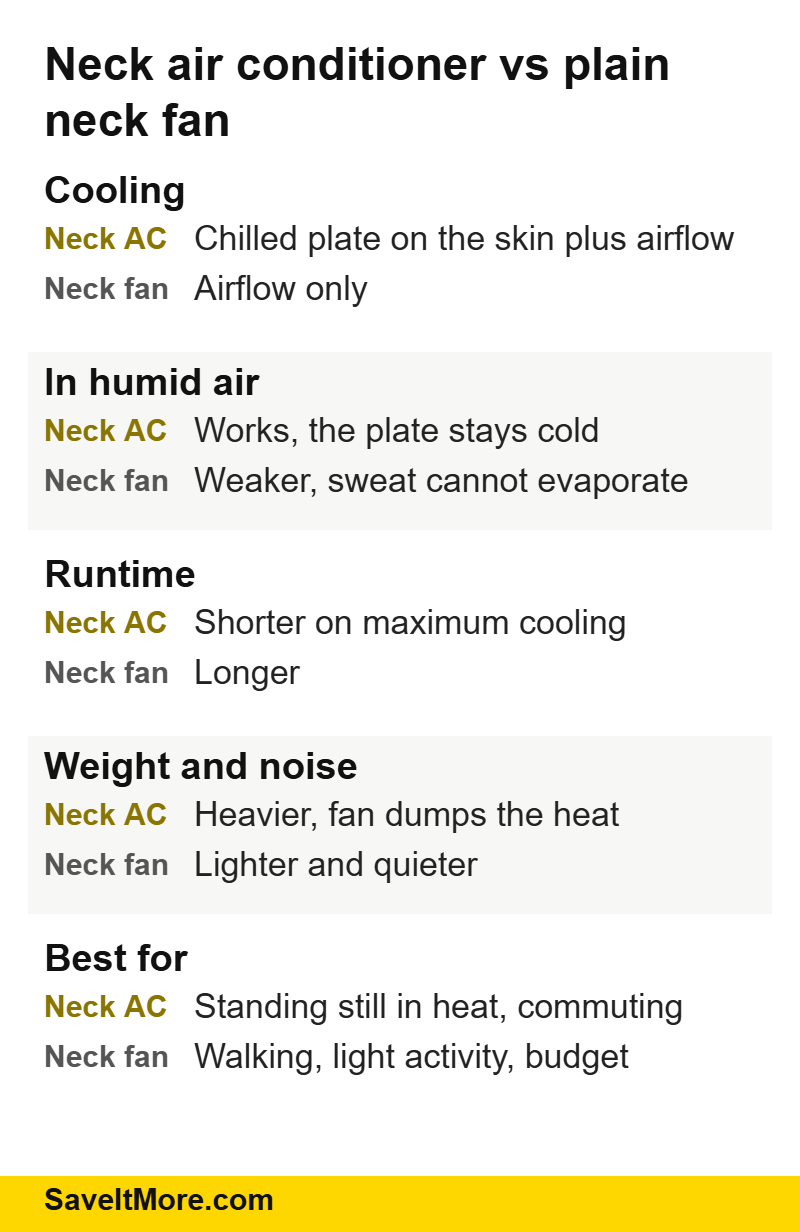
Two very different products share the same shelf. A plain neck fan is a pair of small fans on a collar — it moves air, nothing more. A true neck air conditioner adds a thermoelectric plate that sits against the skin at the back of your neck and gets genuinely cold, usually with fans as well.
The second type costs more, weighs more, and is the one people mean when they talk about a wearable air conditioner. Everything below is about that type unless stated otherwise.
How the cooling works
Inside the collar is a Peltier module: dozens of semiconductor pellets sandwiched between two ceramic plates. Run current through them and heat is pumped from one face to the other, so one plate turns cold within seconds while the other heats up.
That second half matters more than most buyers realise. The heat taken off your skin, plus the heat the electronics create, has to go somewhere, and it leaves through vents and a fan on the outside of the collar. This is why a neck air conditioner is chunkier and louder than a simple fan, and why blocking the vents with a collar or long hair ruins its performance.
What the research actually shows
Neck cooling has been studied, and the findings are more modest than the product pages suggest. In a controlled study of wearable face and neck cooling fans in warm indoor conditions, the largest local skin temperature reduction reported was about 2.1 °C — a real effect, but a local one.
Exercise trials point the same way: people wearing neck cooling report feeling cooler while measurements of core body temperature and sweat loss barely move. In other words, a neck air conditioner changes how hot you feel far more than how hot you are.
That distinction is the single most important thing on this page. Comfort is a genuine benefit — it makes a hot commute bearable and a warm office tolerable. It is not heat protection. If you work in real heat, the precautions from NIOSH on heat-related illness still apply: water, shade, rest breaks, and knowing the warning signs.
Where it helps and where it does not
A neck air conditioner earns its place when you are fairly still in heat: standing on a platform, sitting in a warm room, cooking, shooting outdoors, working a market stall, waiting in queues. It also holds up in humid air, where evaporative gadgets and misting fans fade, because a cold plate does not depend on sweat evaporating.
It disappoints during hard physical work, on a bicycle where the airflow is already strong, and in very hot air where heat load beats a small plate. It is also poor value if you will only use it a handful of days a year — a plain neck fan costs a fraction as much.
7 things to check before you buy
- Plate contact area. A wider cooling plate that actually touches your neck matters more than a headline temperature number. Narrow plates feel cold in the shop and do little in use.
- Runtime on the setting you will use. Quoted battery life is usually measured on the lowest mode. Ask for the figure on maximum cooling — it is often a third of the headline number.
- Charging while wearing. Many units run from a power bank over USB-C. If you need all-day cooling, this is the feature that makes it possible.
- Weight. Anything much over 300 g gets tiring on the shoulders after an hour. Try it on if you can.
- Noise. The fan sits next to your ears. Look for a stated decibel figure and a low mode you can live with in an office or a meeting.
- Fit and flexibility. A collar that springs off when you look down is useless. Bendable arms and a few size options are worth paying for.
- Returns and warranty. This is a comfort product — whether it suits you is personal. A clear return window is worth more than an extra cooling mode.
Using one safely
Do not run a neck air conditioner at maximum cooling directly against bare skin for long unbroken stretches. Prolonged cold contact can irritate or damage skin, which is why better units cycle modes and some include a thin fabric guard. Keep the vents clear, keep it out of the rain unless it is rated for water, and charge it with the supplied cable rather than a mystery fast charger.
If you feel dizzy, stop sweating, or get a headache in heat, take that seriously and get out of the heat. No wearable replaces that.
How to pay less
A neck air conditioner follows the same price pattern as the rest of the personal cooling category: launch prices hold through the hottest weeks, then the discounts arrive once demand drops. Buying out of season is the biggest single saving available.
Beyond timing, check the brand’s own store for a code before you check out — Torras coupons and deals on SaveItMore covers the COOLiFY wearable cooling range and the brand’s phone accessories, and the offers listed there come straight from the store’s own affiliate feed rather than a scraped list.
If you are buying this as a present, it sits nicely alongside the other gadgets in our practical gift ideas for men, and for anyone who spends weekends outside, the camping gift ideas list covers the gear that gets used more often than it gets admired.
Frequently asked questions
Does a neck air conditioner really get cold?
Yes. The plate against your neck genuinely drops below air temperature within seconds. What it cannot do is cool the air around you or lower your core body temperature in any meaningful way.
How long does the battery last?
Expect a few hours on a mid setting and considerably less on maximum. Models that accept a power bank over USB-C get around this limitation entirely.
Is a neck fan good enough instead?
If you are moving and the air is dry, often yes — and it is lighter, quieter and cheaper. In humid air, or when you are standing still, the cooled plate is what makes the difference.
Can you wear one indoors at work?
Many people wear a neck air conditioner at a desk. Check the noise rating first, because the fan that dumps heat is audible in a quiet room.
The short version
A neck air conditioner is a comfort device that works, within limits it rarely advertises. It makes heat feel more bearable where you stand still, it holds up in humidity, and it does nothing for your core temperature. Buy it for comfort, check the runtime on the mode you will actually use, and buy it out of season.