



The portable power station vs generator question usually gets answered with watts, and that is the wrong place to start. The first thing that separates them is where you are allowed to run them, and that single rule decides the answer for most households.
1. The safety rule that decides it
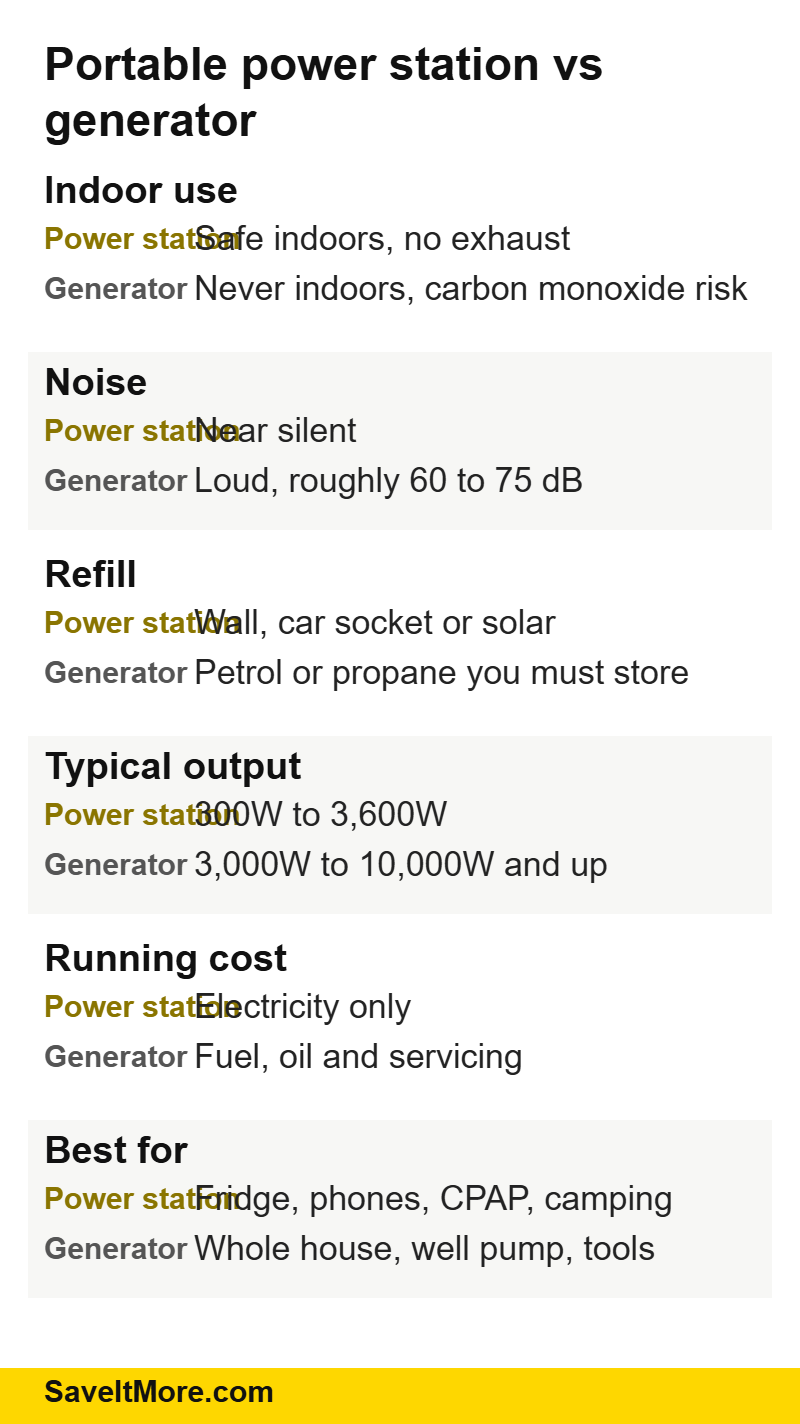
Start the portable power station vs generator comparison here: a generator burns fuel and produces carbon monoxide. The CPSC is blunt about it: never run one indoors, in a garage, in a basement or in a shed, and keep it away from windows, doors and vents. One generator produces as much carbon monoxide as hundreds of cars, and it can incapacitate people within minutes.
A power station is a battery with an inverter. No combustion, no exhaust, so it can sit beside your bed. If you live in a flat, a terraced house with no safe outdoor space, or you need power in a bedroom for a CPAP machine, the comparison is already over.
2. Output: what each one can actually run
In the portable power station vs generator match-up, output is the clearest gap. Power stations for home use typically deliver 300W to about 3,600W of continuous output. That covers a fridge, phones, a router, lights, a laptop and small kitchen appliances one or two at a time.
Generators start where power stations end. A mid-size petrol generator delivers 3,000W to 10,000W and beyond, enough for a well pump, a sump pump, power tools, or a large fridge and a window air conditioner at the same time.
If you have never worked out what you actually need, our guide on what size portable power station you need has the formula and a table of appliance watts.
3. Runtime, and what you do when it runs out
This is where the portable power station vs generator comparison flips. A generator runs as long as you keep feeding it, which is why it wins multi-day outages — but only if you have fuel stored safely and can buy more, which is exactly what gets difficult after a storm.
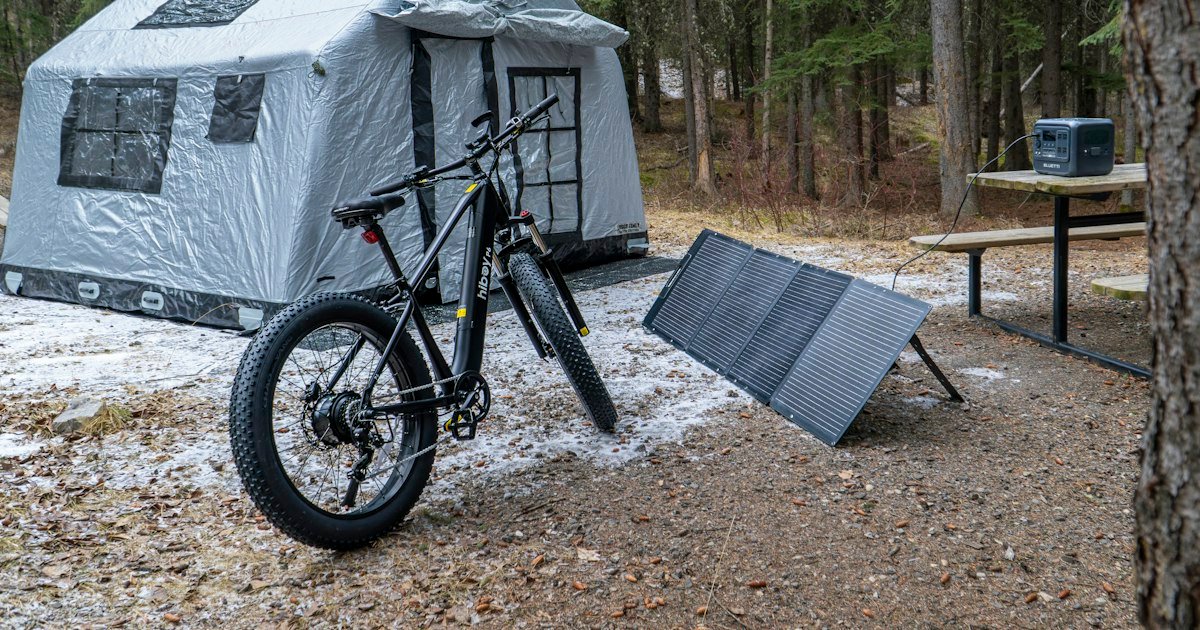
A power station runs until the battery is empty, then needs a source. Wall power is gone during an outage, so the realistic options are a car socket or a solar panel matched to the unit. Solar changes the maths completely: with panels, a power station becomes a system that refills every day instead of a battery that empties once.
4. Noise, and whether your neighbours notice
Noise is the part of the portable power station vs generator decision people underestimate. A power station makes a faint fan noise under load and nothing at all when idle. A conventional generator sits around 60 to 75 dB at a few metres, which is conversation-level to vacuum-cleaner level, running all night. Inverter generators are quieter but still audible through walls.
In a dense street or a campsite with rules, this alone rules out a generator.
5. What each one costs after you buy it
A power station costs electricity to refill, or nothing if you charge it from solar. There is no oil to change, no fuel to go stale and no carburettor to clean. The battery does age, and it loses some of its capacity over hundreds of cycles.
A generator costs fuel every hour it runs, plus oil changes, filters and an annual service. Fuel that sits for a season goes off and gums up the carburettor, which is the most common reason a generator will not start on the night it is needed.
6. Cold weather and storage
In a cold snap, portable power station vs generator becomes a question of two different weaknesses. Lithium batteries lose usable capacity in the cold and most will not charge below freezing, which is covered in our guide to using a portable power station in cold weather. Generators start harder in the cold, and the fuel stored for them degrades.
For storage, a power station prefers to sit at around half charge in a cool dry place, topped up every few months. A generator prefers either an empty fuel system or stabilised fuel, plus a run every month or two.
Which one should you buy?
Buy a power station if: your outages last hours rather than days, you live somewhere a generator cannot safely run, you need silent power indoors, you camp or work outdoors, or you want something you can also use in a car or a van.
Buy a generator if: you lose power for days at a time, you need to run a well pump, a sump pump or heavy tools, and you have safe outdoor space plus somewhere legal to store fuel.
Buy both if: you are in a rural area with long outages. The usual setup is a generator for the heavy loads during the day and a power station for silent overnight power, recharged from the generator while it runs.
How to pay less
Whichever way your portable power station vs generator decision goes, the battery side follows a clear price cycle: the deepest discounts land at the end of the camping season and during the big autumn sale events, while prices harden in early summer and immediately after a major storm. Buying in the quiet months is the single biggest saving.
Before you check out, look for a live code — EcoFlow coupons and deals on SaveItMore lists the current offers, taken from the store’s own affiliate feed rather than a scraped list. Bundles that include a solar panel are usually better value than buying the panel later.
Frequently asked questions
Can a portable power station run a whole house?
Not in the way a standby generator can. The larger units with expansion batteries can cover essentials through a panel interlock, but a typical portable unit is for specific appliances, not the whole property.
Is a power station safe to use inside a bedroom?
Yes. There is no combustion and no exhaust, which is the whole point of the design. Keep the vents clear so the inverter can cool.
How long does a power station last?
Modern LiFePO4 cells are usually rated for a few thousand charge cycles to 80% of original capacity, which is a decade of occasional outage use. Older lithium-ion chemistries age faster.
Can I charge a power station from a generator?
Yes, and it is a common pairing. Run the generator for an hour or two, refill the battery, then shut the generator down and stay quiet overnight.
The short version
In the portable power station vs generator choice, the generator wins on raw output and unlimited runtime, and loses on noise, fumes, maintenance and where you can legally run it. For most households facing outages measured in hours, a power station plus a solar panel is the better buy. For days-long outages and heavy loads, it is a generator — or both.